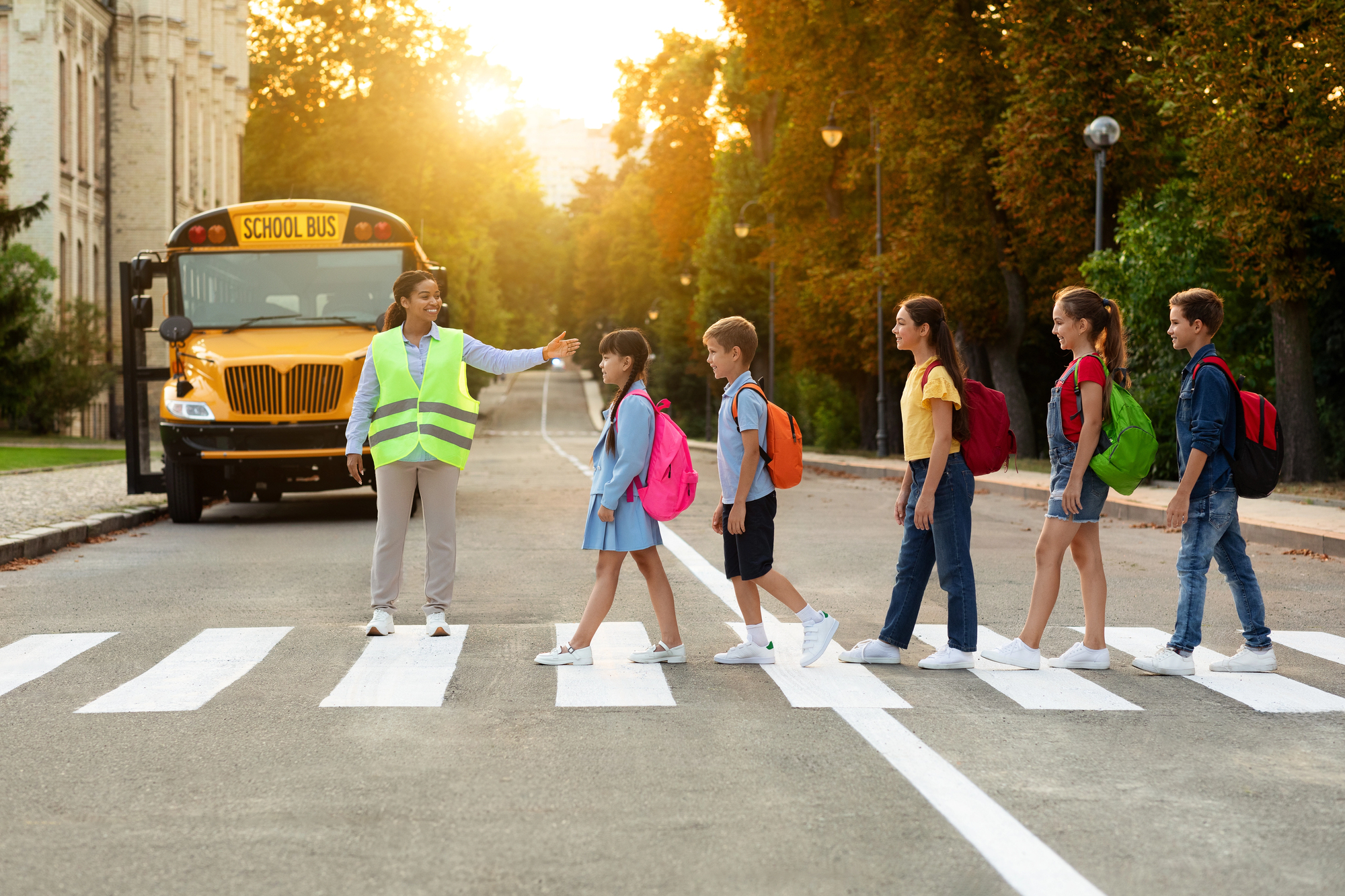
National School Safety Week (October 17-23) is shining a spotlight on the importance of school travel safety and the steps Canadians can take to protect children on their way to and from school. The Canada Safety Council is encouraging drivers, parents, schools and municipalities to work together to improve school zone safety and reduce the risks children face outside the classroom. Whether students walk, bike, ride the bus or travel by car, the journey to school can present hazards including distracted driving, speeding, heavy traffic and poor visibility.
More than 30 per cent of Canadian children and youth use active transportation such as walking or cycling to get to school, according to the Government of Canada’s Health Infobase. That makes child pedestrian safety and school crossing safety critical concerns in communities across the country. Road-related injuries remain a preventable risk. Parachute Canada reports that an average of 18 child pedestrians and cyclists are killed and more than 1,500 are injured on Canadian roads each year. Many of those incidents occur near schools, crosswalks and student pick-up and drop-off areas.
Safety issues are common in school zones. According to the Canadian Automobile Association, nearly one in three drivers has witnessed a near miss or collision near a school, while almost half have observed distracted driving around school zones. “A safe school day starts before the first bell rings and continues until every child is home,” said Gareth Jones, President and CEO of the Canada Safety Council. “By slowing down, staying alert and putting safety first, every Canadian can help make the journey to school safer.”
What You Can Do
Drivers
- Slow down in school zones and stay alert.
- Put away distractions before entering school areas.
- Stop for school buses and watch carefully for children crossing.
- Never pass a stopped vehicle at a crosswalk or school crossing.
- Give pedestrians and cyclists extra space.
Parents and Caregivers
- Practise the route before children travel independently.
- Use marked crossings whenever possible.
- Help children stay visible with bright clothing or reflectors.
- Park a short distance away to reduce congestion at school entrances.
- Model safe road behaviour every day.
Schools and Communities
- Review safe pick-up and drop-off procedures with families.
- Identify hazards such as blocked crosswalks, illegal parking, and unsafe turning movements.
- Encourage active school travel where appropriate.
- Work with local partners to improve safety around schools.
The Bottom Line
- Creating safer school travel does not require a single major change.
- Small, everyday actions by drivers, parents, schools, and communities can help ensure every child gets to school safely and returns home safely each day.