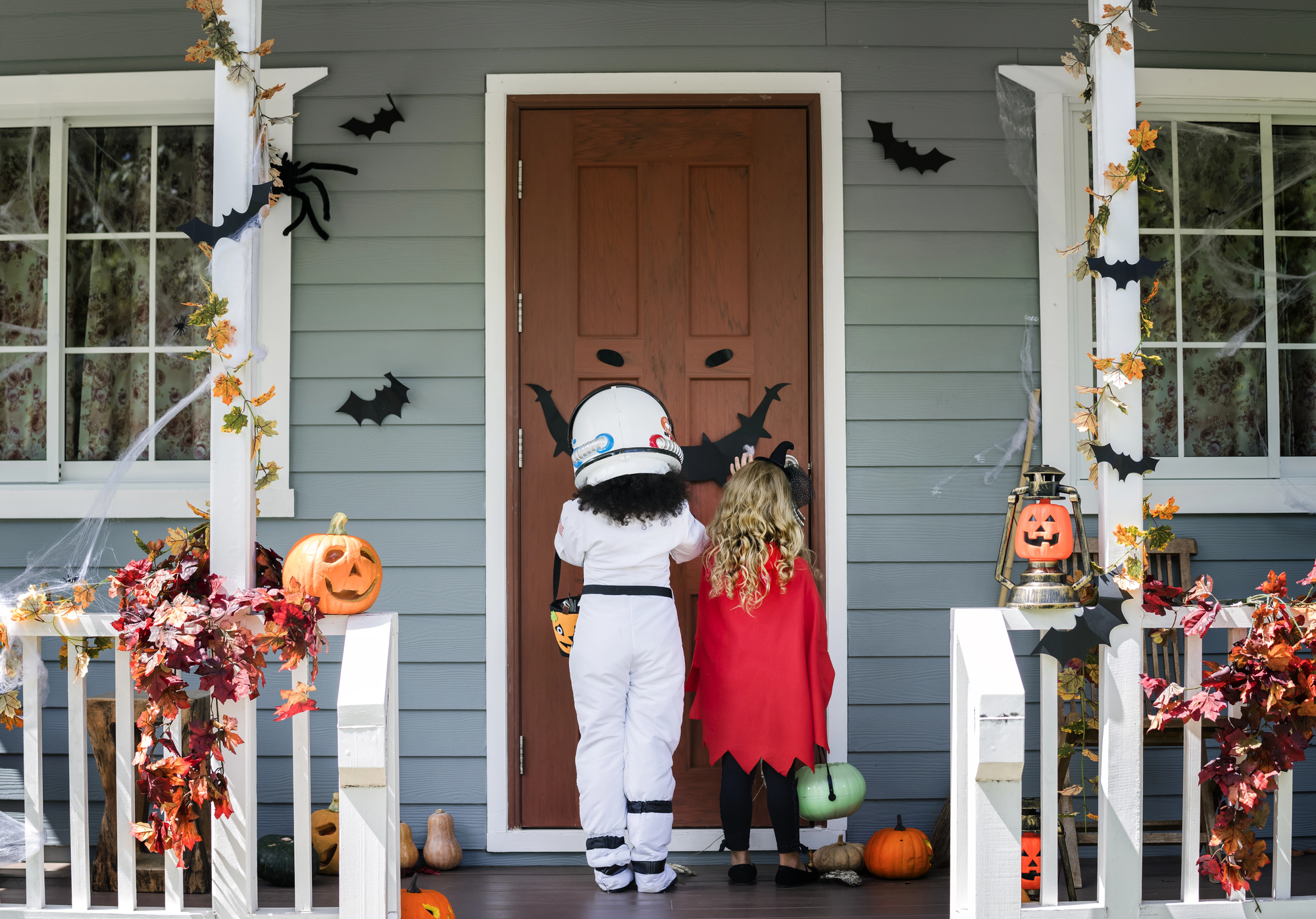
Manitoba children have some of the best trick-or-treating prospects in the country this Halloween, according to new research that ranks the province fourth among Canada’s provinces and territories for the number of front doors within walking distance.
The study found that the typical Manitoba child between the ages of five and 14 lives in a neighbourhood with 378 houses per square kilometre, or roughly one front door every 51 metres if homes were evenly spaced. The research was conducted by data analysts at playcasino.com, using data from Statistics Canada’s 2021 Census of Population.
Only Alberta, Ontario and British Columbia ranked ahead of Manitoba. Alberta and Ontario were effectively tied for first place, with less than 0.3 per cent separating the two provinces.
“Trick-or-treating is a numbers game,” a spokesperson for playcasino.com said. “The more front doors children can reach before little legs give out, the better the night, and that mostly comes down to how tightly the houses are packed together.”
The study notes that dense neighbourhoods featuring semi-detached and row housing often allow children to reach more homes in less time than sprawling suburban or rural communities. It also points out that Canada’s largest cities do not always rank highest because many families live in apartment buildings, which were excluded from the analysis.
Winnipeg Dominates Manitoba’s Top Neighbourhoods
All 10 of Manitoba’s most door-packed postal code areas are located in Winnipeg.
Point Douglas East (R2W) and the Minto, St. Matthews and Wolseley area (R3G) tied for first place, each with 994 houses per square kilometre. At that density, children would encounter a front door roughly every 32 metres. The study also found that one in seven residents of Point Douglas East is between the ages of five and 14.
East Kildonan (R2K) ranked third with 904 houses per square kilometre, followed by Elmwood (R2L) at 864.
Manitoba’s 10 Postal Areas With the Most Doors to Knock On
- R2W (Point Douglas East, Winnipeg) – 994 houses per sq. km.
- R3G (Minto, St. Matthews and Wolseley, Winnipeg) – 994
- R2K (East Kildonan, Winnipeg) – 904
- R2L (Elmwood, Winnipeg) – 864
- R2M (St. Vital North, Winnipeg) – 752
- R3M (Crescentwood, Winnipeg) – 742
- R3L (River Heights East, Winnipeg) – 706
- R3E (Sargent Park and Daniel McIntyre, Winnipeg) – 693
- R3K (St. James-Assiniboia Southwest, Winnipeg) – 650
- R3N (River Heights West, Winnipeg) – 647
On a municipal level, Winnipeg led the province with 425 houses per square kilometre, more than double the density of second-place Winkler.
Manitoba Municipalities With the Most Houses per Square Kilometre
(Population 10,000+)
- Winnipeg – 425
- Winkler – 207
- Portage la Prairie – 180
- Thompson – 175
- Brandon – 172
Manitoba Ranks Fourth Nationally
The study ranked provinces and territories according to the housing density of the census neighbourhood where the typical child lives. Researchers analyzed all 57,936 dissemination areas across Canada to determine where youngsters have the greatest number of potential trick-or-treat stops within walking distance.
Canada’s Provinces and Territories Ranked by Doors to Knock On
(Houses per sq. km. in the typical child’s neighbourhood)
- Alberta – 680
- Ontario – 679
- British Columbia – 468
- Manitoba – 378
- Quebec – 295
- Saskatchewan – 282
- Newfoundland and Labrador – 146
- Nova Scotia – 106
- Yukon – 106
- New Brunswick – 63
- Northwest Territories – 53
- Prince Edward Island – 52
- Nunavut – 12
How the Study Was Conducted
Researchers at playcasino.com analyzed Statistics Canada census data and counted single-detached, semi-detached and row houses while excluding apartment buildings and flats. Rankings were based on residential density rather than total population, with postal areas required to have at least 5,000 residents and 1,000 houses to be included.
Figures were rounded to the nearest whole number. Researchers noted that Statistics Canada applies random rounding in small geographic areas, meaning places within roughly two per cent of each other should be considered effectively tied. Door-to-door distances are approximate and assume homes are evenly distributed across a neighbourhood.